
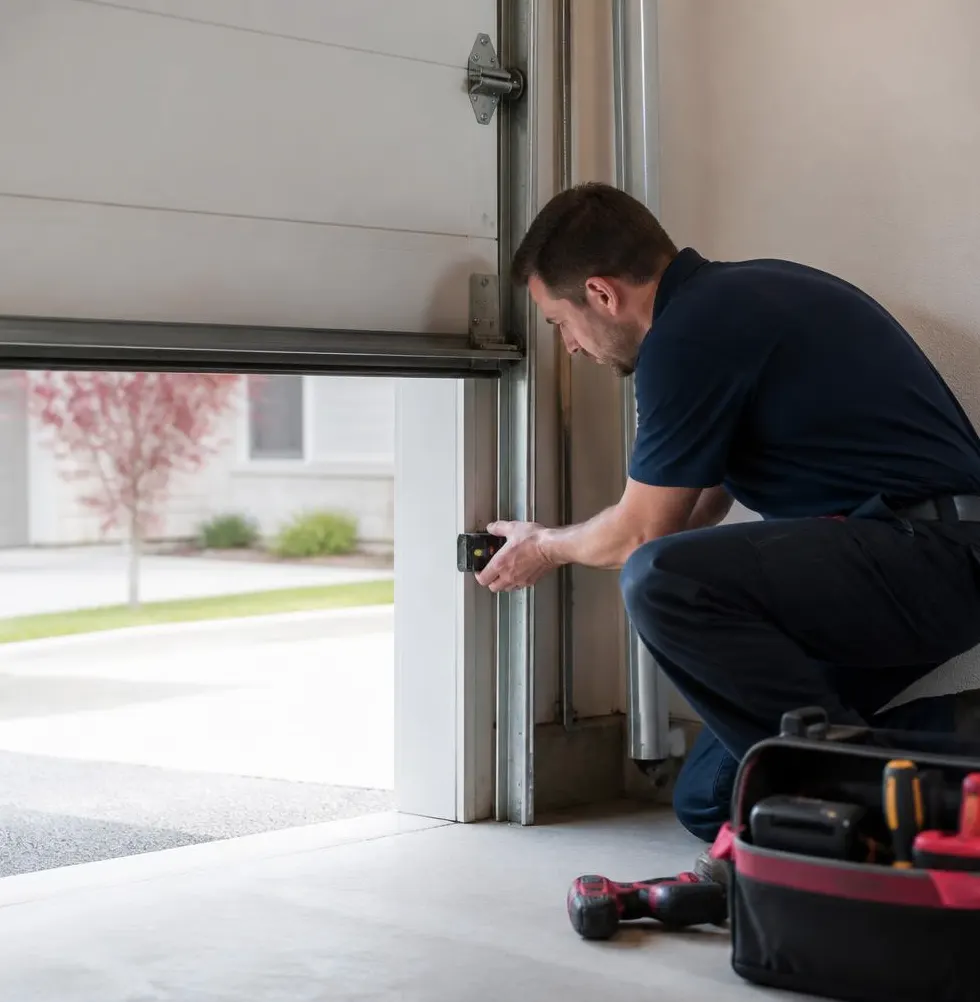
Rule of thumb: if you're swapping one garage door for a similarly sized door in the same opening, you usually don't need a permit or special HOA approval — but almost everything else (size changes, style changes, structural changes, or living in a wind-prone area) can trigger one or both.
That's the short version. Here's the long version that actually settles the argument.
When you probably don't need a permit
Most cities treat a like-for-like garage door swap — same size opening, same general style, no changes to the header or framing — as a cosmetic repair rather than new construction. If a crew is removing your old door and installing a new one in the exact same spot with the same dimensions, many municipalities don't require a permit for that alone.
Where it gets complicated:
- Changing the opening size. Widening a single door to a double, or converting two single bays into one large opening, means altering the header, framing, and sometimes the roof load path. That's structural work, and it almost always needs a permit and an inspection.
- Adding or moving an opener. A straightforward opener swap is typically fine without a permit. But if the job involves new electrical circuits or significant wiring changes, some jurisdictions want that inspected.
- New construction or additions. If the garage door is part of a new garage, addition, or detached structure, permits are essentially guaranteed, separate from anything about the door itself.
The only way to know for certain is to call your city or county building department and describe the exact job — same-size replacement, upsizing, new opener wiring, whatever it is. A five-minute phone call is cheaper than tearing out work that wasn't permitted when it should have been.
HOA rules are a different animal than permits
Permits are about safety and code. HOA rules are about aesthetics and consistency, and they can be stricter than any city requirement. A lot of covenants spell out:
- Approved door styles (raised panel vs. flat, carriage-house look vs. modern)
- Approved colors or a requirement to match the house trim
- Window pane styles or whether windows are allowed at all
- Material restrictions (steel vs. wood-look composite vs. real wood)
Here's the part that causes arguments: HOA approval and city permits are completely separate processes. You can be fully within code and still get a violation notice from your HOA for installing the wrong color or style. Before you order anything, pull out your HOA's architectural guidelines or declaration and check — don't assume last year's approved color is still the current one, since some associations update their palettes.
If your subdivision has an architectural review committee, submit the door spec sheet (manufacturer, color code, panel style) before you buy, not after it's installed. Getting pre-approval in writing is the only way to avoid a repaint-or-replace order down the road.
Wind-load codes matter more here than people think
This region sees real spring storm and tornado season, and garage doors are one of the most common failure points when high wind hits a house. A standard residential garage door is one of the largest unsupported openings on most homes — when it fails under wind pressure, the pressure change inside the garage can stress the roof structure too.
Some municipalities in storm-prone parts of the country require wind-rated garage doors or additional bracing kits for new installations, especially on homes without a fully enclosed garage interior wall. Even where it's not mandated, it's worth considering:
- Wind-rated doors use reinforced tracks, heavier-gauge steel, and additional struts to resist higher wind pressures.
- Retrofit bracing kits can upgrade an existing door's wind resistance without full replacement, often for less than the cost of a new door.
- Cost trade-off: wind-rated doors typically run somewhat higher than standard models (national ranges for a basic two-car door replacement commonly fall in the low-to-mid thousands, with wind-rated upgrades adding to that), but the alternative is a door that blows in during a storm and takes drywall, insulation, or vehicles with it.
Given the ice, salt, and big temperature swings this area deals with every winter too, a heavier-duty door often earns its keep twice over — once in storm season, once in January.
When to call Kearney Door & Opener
If you're not sure whether your planned replacement needs a permit, whether a wind-rated door makes sense for your home, or you just want someone to measure the opening and tell you what's actually possible before you argue about it further, that's exactly what a site visit is for. Kearney Door & Opener handles garage door installation and can walk through sizing, style, and wind-rating options specific to your house, plus garage door maintenance if the real question is whether you need a new door at all or just a tune-up on the one you've got.
Before you buy anything or submit paperwork to the HOA, give Kearney Door & Opener a call — serving Kearney, Liberty, Excelsior Springs, Smithville, Holt, Platte City, Richmond, and Lawson, MO.